
Project Overview
Working with a complex substitution and cost-benefit model and presented it in a simplified way that would be familiar to clinicians: patient treatment pathways.
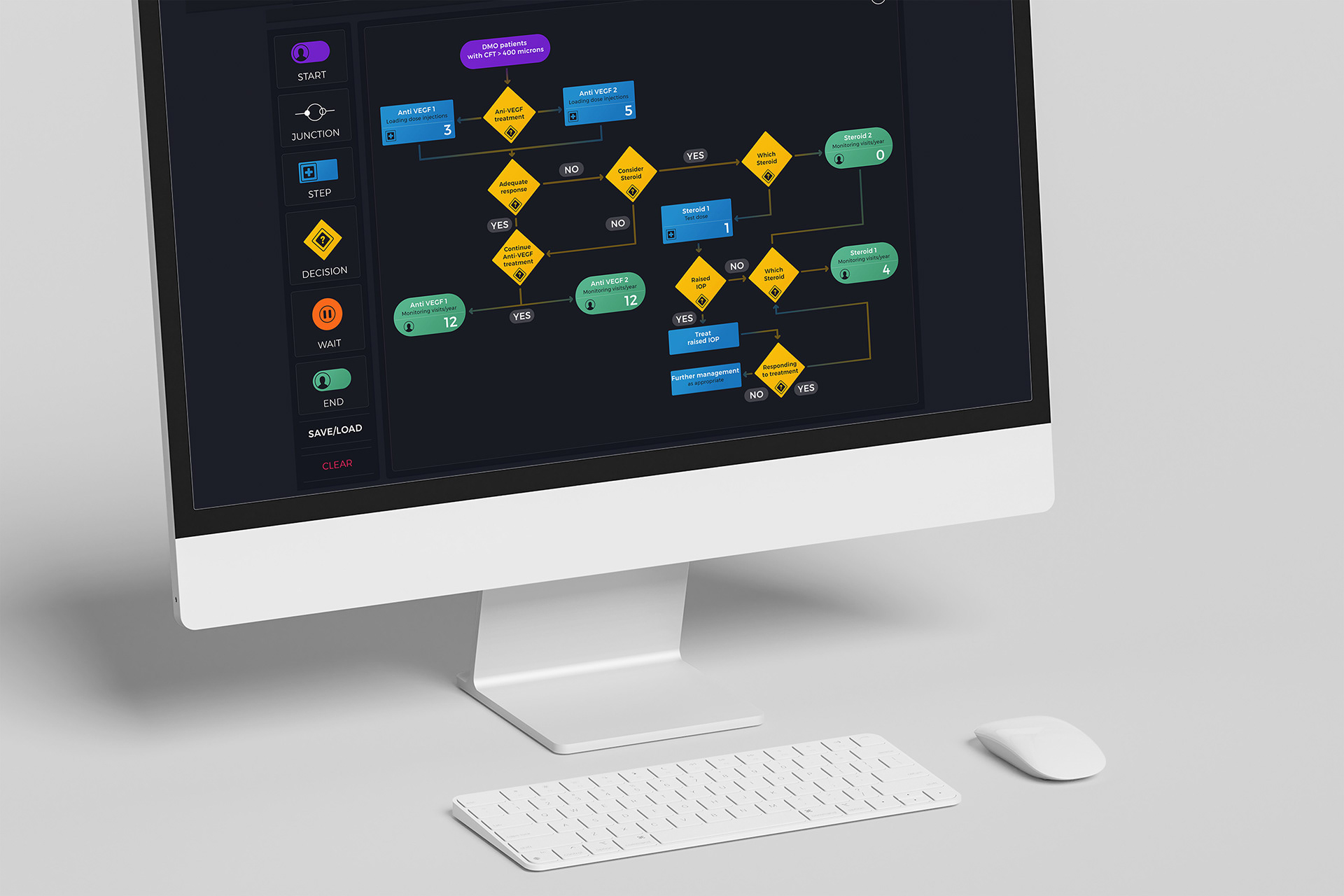
Generated high levels of engagement by using a treatment pathway diagram based on NICE design that was familiar to the target audience.
Interactive controls, such as this slider, enable users to easily change model assumptions and immediately display their impact.
The model also displayed a ‘Call to Action’, to encourage and guide the audience to act on the information presented either in person or face-to-face.
The Challenges
Simplifying complex models for clinicians: Translating a detailed substitution and cost–benefit model into a format that aligns with clinicians’ familiar patient treatment pathways.
Driving audience engagement: Creating a treatment pathway diagram based on NICE design standards to ensure immediate recognition and comfort for the target audience.
Enabling real-time interactivity: Implementing interactive controls (e.g., a slider) so users could effortlessly adjust model assumptions and see immediate impacts on outputs.
Prompting actionable insights: Designing a clear “Call to Action” within the model to guide and motivate users—whether in person or remotely—to apply the information presented.

Our Solution
• Translated a complex substitution and cost–benefit model into a simplified, clinician-friendly format using patient treatment pathways.
• Created a treatment pathway diagram based on NICE design principles, enhancing clarity and familiarity for the target clinical audience.
• Implemented interactive controls—such as a slider—that allowed users to adjust key model assumptions and instantly view the impact on outcomes.
• Designed the experience to generate high engagement by combining interactivity with visual clarity and relevance to real-world clinical decision-making.
• Included a clear, embedded ‘Call to Action’ to prompt and guide users toward applying the insights—whether during in-person presentations or self-directed use.